
PERTH FESTIVAL REVIEW: "Lé Nør" is a raucous, imaginative, cinematic thrill ride
How is it that the most cinematic moment I’ve experienced this year came from a stage play?
On February 27th, this was the case with Lé Nør [the rain], a self-described "faux foreign film" performed live each night at the Heath Ledger Theatre as part of the Perth Festival season. Brought to you by The Last Great Hunt, a non-hierarchical artist-driven theatre collective, Lé Nør is exactly what it says on the tin.
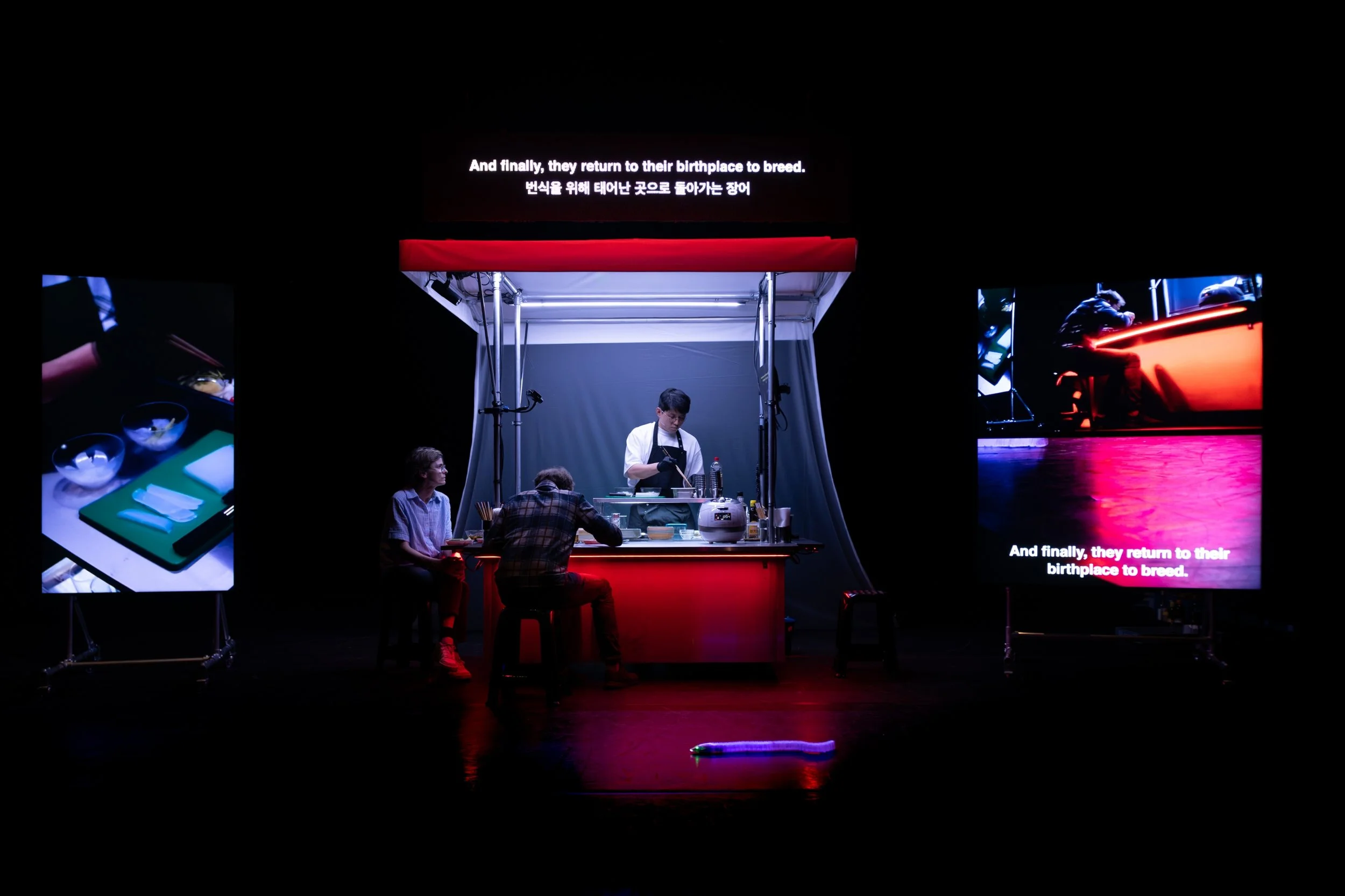
Centred around a giant screen, complete with yellow-fonted subtitles, it evokes the feeling of watching a niche foreign film on SBS. One that we didn't seek out ourselves, but that accidentally found us on an unsuspecting night at home, and completely took us by surprise.
Lé Nør follows the trials and tribulations of the inhabitants in an apartment building in the once-thriving island nation of Sólset. The opening sequence is a televised wrestling match that serves as a PSA of sorts for the citizens, cluing us in to their current climate: following a ten-year drought, they are forced to ration water. Life is not what it used to be in Sólset. People are leaving in droves, while the hardcore hopefuls decide to stay in hopes of a miracle rain that just might come. But the conviction of some has started to wane. We zoom in and follow the lives of the inhabitants of a particular apartment building as the tragic death of one of their own kicks off a kaleidoscopic story of love, loss, letting go, and doing your best in a world that’s crumbling around you. It’s a roller coaster ride of a story: part simmering romance, part zany comedy, and part social commentary.
From its magnetic opening sequence, a propulsive, high-octane WWE-style fight between two wrestlers, the show is breathtaking in its commitment to craft and experimentation. The sequence unveils on screen like a film would, with the camera providing a side-by-side point of view of the two wrestlers as they duke it out.
But what makes this spectacular is that we witness how each shot is crafted on stage. We see the mechanics of the movie magic. What appears on the big screen is being enacted in real time, enacted beside it, around it, and sometimes directly in front of it. Hand-held cameras whip around and pivot as needed, finding their way to the performers and props, capturing footage of what we see projected on screen. This is the signature, the inventive form that powers Lé Nør.
The entire piece is jam-packed with a wide variety of innovative filmmaking and theatre-making techniques, experimental and improvised digital methodology that produces a surprisingly coherent remix of genres. It's a little bit Rocky Horror, a little bit Amélie, and a little bit GLOW.
Even the spoken words in the film are an original invention. Not quite French, not quite Scandinavian, but almost a Simlish mish-mash of European dialects that mimics the feeling of watching a film in a language you don't quite know. It's not complete gibberish either; there's a grammatical logic of its own that adds to the feeling of verisimilitude in the way the characters communicate, as we watch their outlandish shenanigans unfurl throughout the story.
It's clear from the piece's inception that it is driven by a very strong desire to have a dialogue with the audience. The onstage Narrator functions as our guide through the wonderfully bizarre post-apocalyptic world of Sólset. He speaks directly to us, bringing the camera with him as he interjects and comments on the lives of the apartment’s inhabitants as they navigate life. Part of the show’s playfulness is in its willingness to break the fourth wall completely, from the Narrator cheekily asking the on-stage technician to enlarge the screen featuring his face in a meta back-and-forth exchange, to having characters address the narrator directly, annoyed at how he has unjustly framed their situations in his pointed commentary on their lives.
There's something intimate for the audience about being let in on the process. Something about the transparency, coupled with the ensemble cast’s utterly transfixing collaborative effort, that connects us to the story and allows us to invest more deeply in what happens to the characters in the film. Each performer is pitch-perfect in the embodiment of their (often times, multiple) respective roles.
The show is also very funny, from the decadent face makeup and big hair of its 80s romanticism aesthetic in its deliriously loud costume design, to the unapologetically campy spirit that permeates its visual gags and quippy dialogue. Lé Nør wears its full heart proudly, which paves the way for an unexpectedly moving final act.
One of the most astounding feats of Lé Nør, is that it could so easily have been crushed by the weight of its own ambition. What they set out to do each night equates to delicately puppetered chaos: creating a live foreign film with a minimal cast who interchange roles in real time (both in the characters they play and in their stage function), all while ensuring their camerawork and scene transitions play out seamlessly on screen. Yet, through exceptional discipline and razor-tight collaboration, a strong sense of connection with the audience, and incredibly skilled theatre-making, The Last Great Hunt manages to walk this impossible tightrope with remarkable fluidity. What results is an endlessly engaging, uproariously hilarious, and narratively rich story that washes over its audience like a tidal wave.
5 out of 5 stars
Photography by Daniel Grant