"Hamnet" review: Jesse Buckley and Paul Mescal are magnificent in Chloé Zhao's heart-breaking meditation on grief
More than an homage to William Shakespeare, this adaptation from the 2020 novel Hamnet by Maggie O’Farrell tries to humanise the legendary Bard by showing his courtship of the mysterious and mystical Agnes, their domestic bliss as a family of five, the grief and mourning of losing a beloved son, and the catharsis achieved through art. But the strength of this film lies in the naturalistic and immersive way Chloé Zhao attempts to depict the lives of her characters.
At the centre of this story is Agnes (Jesse Buckley). We see William (Paul Mescal) revealed through her eyes and her insight. When she first touches his hand, using her second sight, she has revelations of an infinite well of creativity. This sounds like it could come off as fantasy, but the naturalistic way it’s presented plants this firmly in our world, showing mysteries that cannot be easily explained or rationalised.
She’s wooed by The Bard, her stoic reticence melted by his rendition of Orpheus and Eurydice, and the romance takes off from there, straight into the joy of domestic bliss.
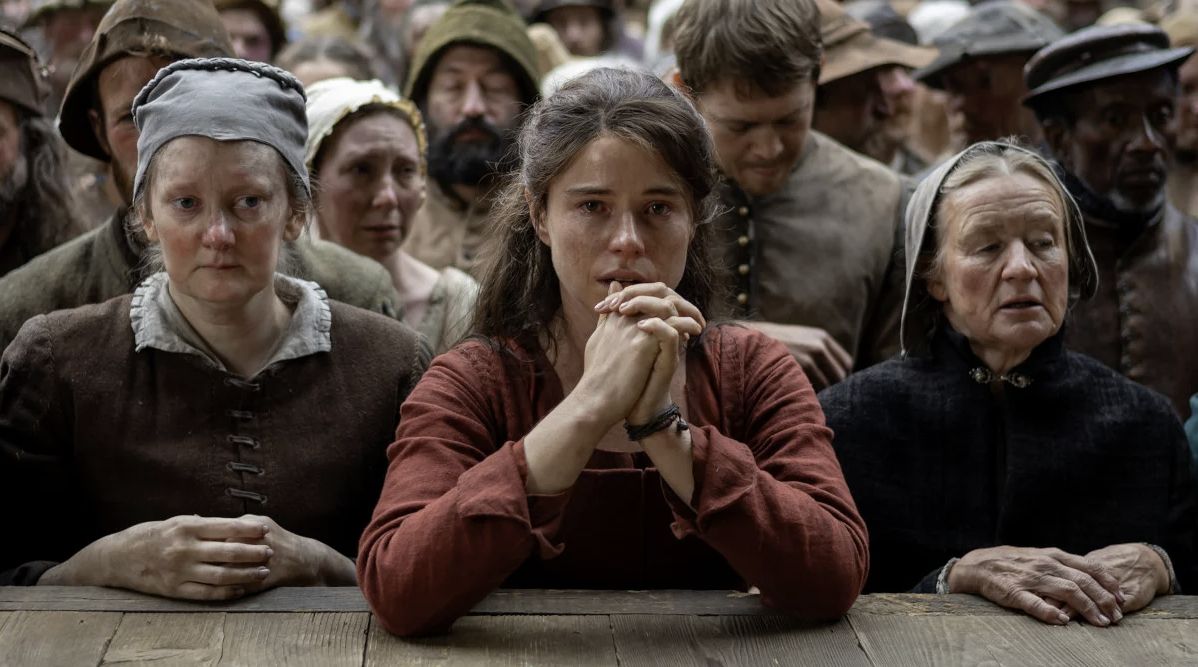
Buckley is magnificent as Agnes. Whether she’s wary of the interests of this forward Latin tutor, rapturously delighted with the joys of her family, or suffocating with grief, she’s incandescent.
From the very first shot, we’re shown Agnes’ connection to the natural world: The wilds in which she inhabits are beautifully rendered, deep verdant greens everywhere, drenched in natural light. She’s established as a Druidic figure, learned in plants and capable of hunting with her hawk; there’s even a local rumour that she’s a “witch’s daughter”.
Mescal’s Shakespeare shows that infinite well to draw upon as he ranges from the manically frustrated writer in the face of creative impotence, to his fuming defiance when confronted with his abusive father, but where Mescal’s performance truly shines is as an impassioned father of three, playful and sensitive, bringing all of that creativity and imagination to his family. He captures the true happiness of that domestic bliss of being with the ones you love, and he brings the full well of that creative passion to loving and playing with his family.
And it’s these performances that make the film for me.
These performances, populating this immersive environment, whether it’s the woods or the Tudor houses, or the replica of Shakespeare’s Globe, all drew you into this film. Even the costuming was immersive. In the first close-up of Agnes, you can see the texture of her dress, this deep red set against the green, and you could see the stitching and almost feel the coarse thread of it.
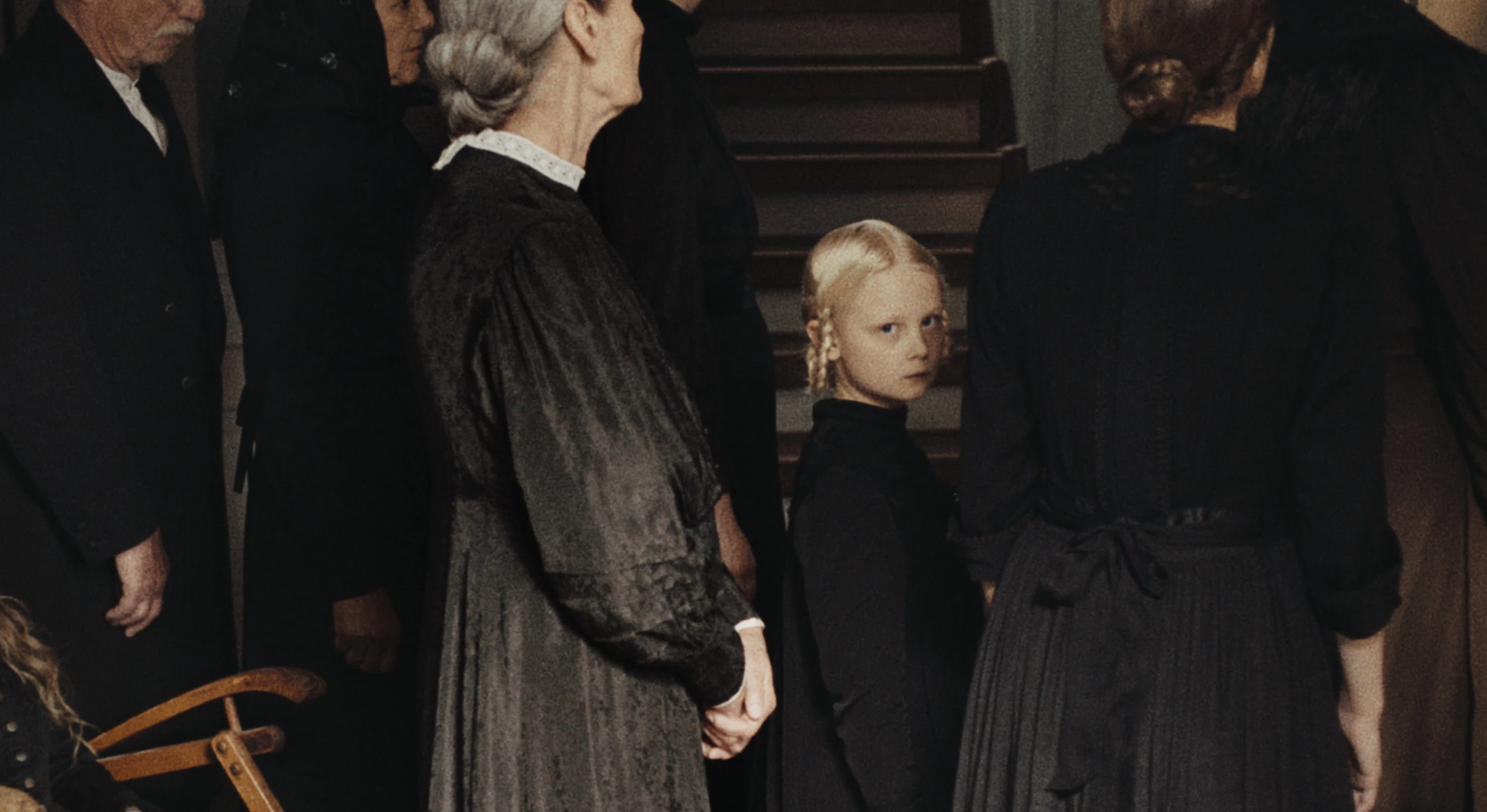
And of course, the loss behind the story. Hamnet’s death by plague looms over the entire film. Even from the beginning, it’s hard to let go of the knowledge that this blonde cherub will soon die, but Jacobi Jupe delivers a phenomenal performance which captures this sensitive young boy’s brightness.
The only point at which this immersion falters is William’s near-miraculous moment of “creative genius” around Hamlet as the film hurtles toward its climax. Grief-stricken by his son’s death, and burdened by guilt over his absence at Hamnet’s deathbed, William attempts suicide. Standing on the brink of the Thames, he halts before throwing himself in and instead delivers the now-famous soliloquy: “To be, or not to be…”
This pulled me right out of my viewing. All this effort they’d gone to not to rely on the fact that this was THE William Shakespeare (his full name is only ever used once, in the final act of the film), this delicate dream they’d crafted is dispelled, and I’m reminded that I’m in a cinema in Innaloo, Perth, and not Elizabethan England. The film had, in a way that seemed intentional and tasteful, avoided leaning on the pretence of Shakespeare and attempted to craft a naturalistic depiction of his life. I can understand how one little wink might make sense, but to me it felt at odds with the tone of the rest of the film.
And while the stunning final scene of the film’s release is deeply satisfying and provides a strong emotional resolution, ultimately, the thematic link between Hamnet, the film, and Hamlet, the play, feels tenuous.
So: To see or not to see?
My answer: Definitely. It’s a must-watch for anyone with a heart and a tendency to romanticise family happiness, but also not shy of a tearjerker.