
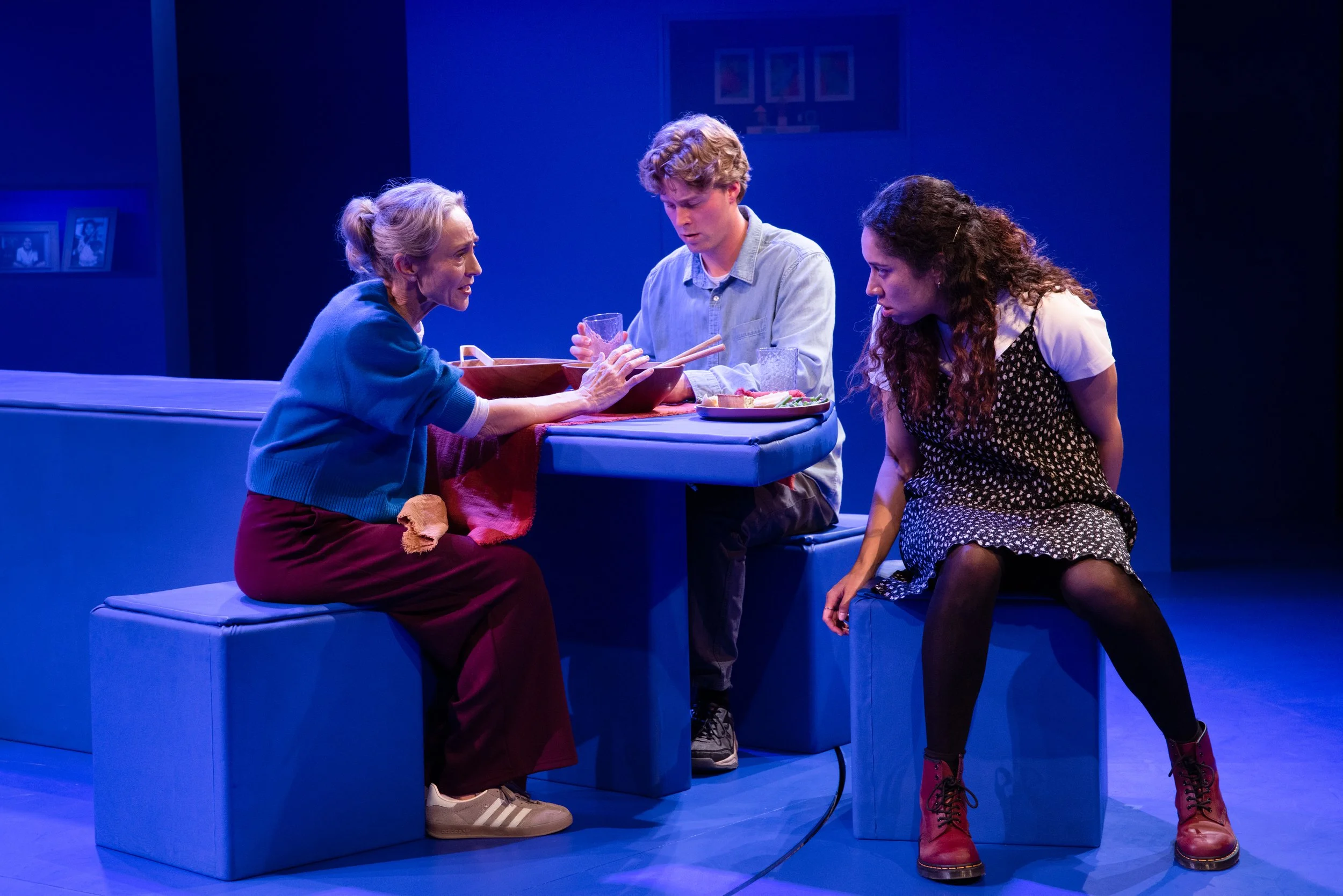
THEATRE REVIEW: "The Almighty Sometimes" is compelling, confronting, and achingly alive
Theatre is at its most effective when it reaches beyond the simple impetus to entertain. Like so many of the performing arts, it is at its best when it challenges us, by offering a unique prism through which to view our lives, asking us to consider what we find refracting back: glimpses of human behaviour we can't help but recognise in ourselves, novel perspectives from lives we have not led, and the uncomfortable truths about the world we'd rather not face.
The Almighty Sometimes reaches for that prism, and across its 2-hours and 25-minutes runtime, poses an unflinching question: How does lifelong mental illness shape the relationships we build with the people around us? This question sits as the centre of Kendall Feaver's play, a compelling, confronting and often achingly alive coming-of-age story that takes an honest look at the myriad ways mental illness can influence the life of a young person still working out who they are.
Presented by The Black Swan State Theatre Company, Feaver's script dives deep into how complex a person's relationship with their own illness can be. And a key reason the story sings is the vivid portrayal of its central characters, the product of both the writing, and the dedicated performances of its cast.
The story of The Almighty Sometimes finds itself in Anna, on the cusp of eighteen. Having spent much of her childhood medicated for her mental health challenges, she begins to question the course of treatment she has been put through her whole life, and, in turn, the two people who have been instrumental in it: Renée, her fiercely protective mother, and Vivienne, her psychiatrist, who has begun raising the need to transition her into adult care. And as if that were not tricky enough for a young adult to handle, an unexpected romance enters the picture, through Oliver, who carries emotional baggage of his own.
With these pieces set on the board, we are plunged into Anna's decision to stop taking her medication cold turkey, and the ramifications ripple outward. Questions of self-discovery, of how any of us make the right decisions for our own lives, begin to cascade through each character in unexpected but deeply relatable ways.
‘Ana Ika is breathtaking in the lead role. She navigates a complicated character with such undeniable vivacity, offering us a sympathetic pathway into a character who sometimes makes decisions that frustrate us despite the best of intentions. We delight in Anna's charming wit, feel our hearts ache against her self-sabotaging choices, and weep with her as she fights an uphill battle to gain some sense of control over her impossible circumstances. Through it all, Ika pulsates in a buoyantly lively physical performance.
If Anna is the beating heart of the narrative, then the rest of the cast are the lifeblood that gives this story its shape. The play takes what could have very easily been stereotypes and subverts our expectations of its supporting characters by imbuing them with surprising depth. Renée arrives as the familiar overprotective parent archetype, but as the play goes on, she blooms into a deeply flawed mother struggling to toe the line between care and control. She makes mistakes. She crosses boundaries. But she is also undying in her desire to be there for Anna. It is a very difficult tightrope act, yet Alison van Reeken walks it gracefully, with well-placed restraint, so that when her emotions finally bubble over, we feel their impact deeply.
The character of Oliver, played with such open vulnerability by Harry Gilchrist, is another welcome surprise. He moves steadily from a 'plot point' love interest, there to inject some lighter moments, into a multi-faceted character who offers a nuanced counterweight to the show’s themes, exploring how mental illness can colour the already complicated terrain of romantic relationships. Gilchrist holds his own against two powerhouses in Ika and van Reeken, through his charm and his soulful portrayal of Oliver's inner struggles.
Through it all, psychiatrist Vivienne weaves in and out of the story, in her sessions with Anna and in a key confrontation with Renée. Amy Mathews is perfectly cast, delivering a wholly believable performance as a clinician trying to do right by her patients, and serving as a fascinating window into the challenges mental health caregivers face in a field with no easy answers. If anything, I found myself wanting a little more of Vivienne; her thread doesn't always integrate as smoothly as the rest, and more of her perspective would have helped some of her decisions connect in a more organic way.
It would have been so easy to lean squarely on the inherent drama of a person struggling with mental illness, but The Almighty Sometimes takes no such shortcut. It does not simply pay lip service to its subject matter, or use it as a convenient backdrop to prop up its narrative. Instead, through exceptionally well-developed characters, a committed cast at the top of their game, and cleverly minimalist production design, the play gives us a layered, richly woven tapestry that intersects intricately with its subject matter. It is not always a comfortable watch, but it is a meaningful one, and the mirror it holds up is one we would all do well to look through.
4.5 Stars out of 5
The Almighty Sometimes ran at Subiaco Arts Centre from 19 June to 5 July 2026.